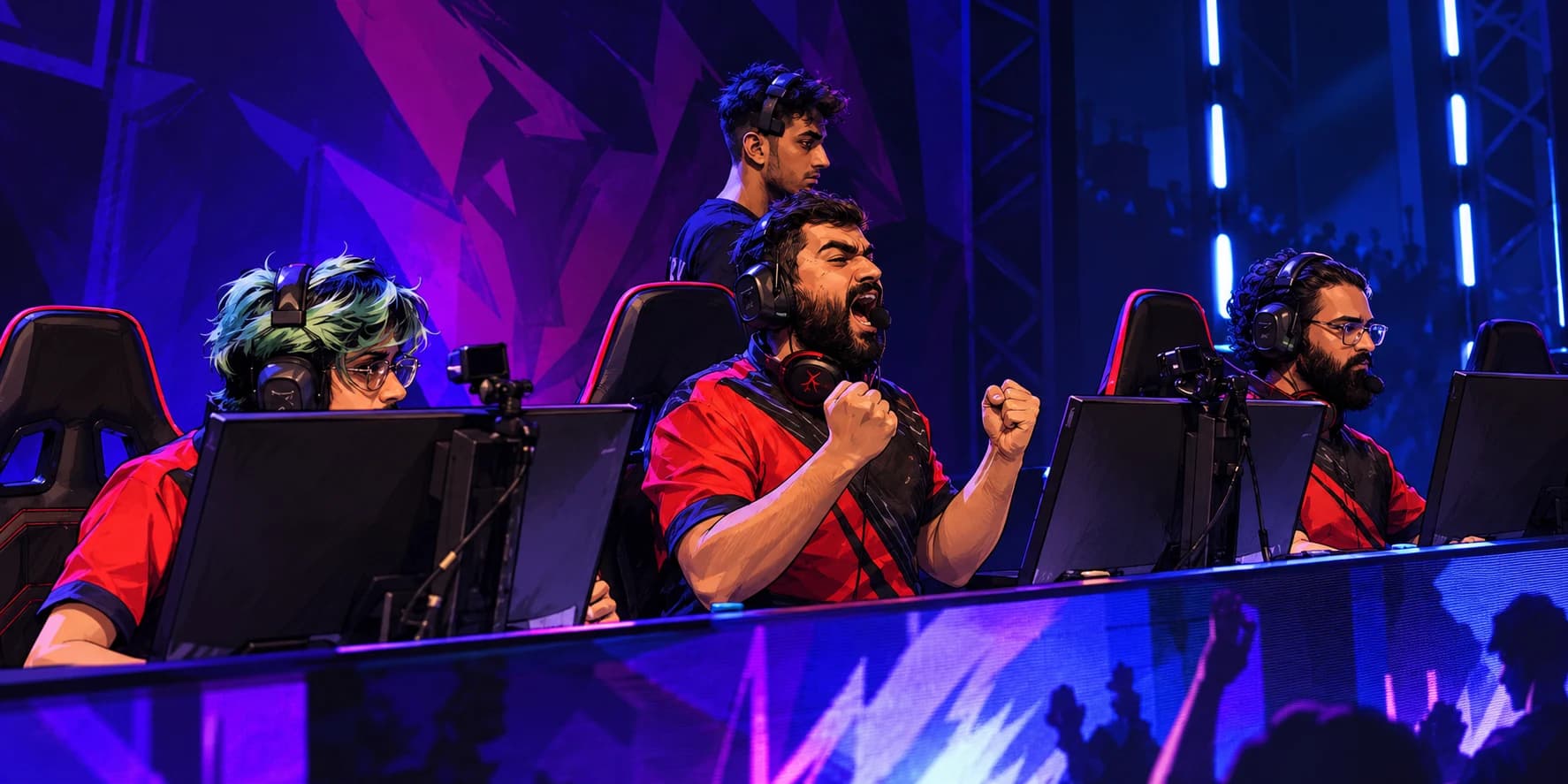

THE CONVERSATION MANY PLAYERS KNOW
“Padhai karo, khelne se kya hoga?” For a young person excited about games, that response can close a conversation before it starts. A parent may be worried about exams, unstable careers, or too much screen time. A student may hear that their interest has no value. Both deserve a better discussion than a quick dismissal.
We should not pretend every Indian family thinks the same way, or that traditional sport has no support. The issue is the pressure to treat interests outside academics as distractions unless they produce an obvious result. Esports enters that conversation with an extra hurdle: to someone unfamiliar with it, structured competition can look identical to an evening of casual play.
Our argument is that schools can make the distinction visible. Studying and playing responsibly can coexist. A school programme should offer supervised learning and exploration, not promise students a professional contract.
TEACH THE WORK BEHIND THE SCORE
India’s National Education Policy 2020 includes sports-integrated learning and emphasises collaboration, teamwork, responsibility, and self-discipline. It does not make the esports-lab proposal in this article a national requirement. It does give us a useful educational question: what could a carefully designed programme help students practise?[1]
A team can practise explaining a decision, listening to feedback, reviewing a mistake, and keeping commitments. Students interested in production could make match graphics, record a commentary segment, or manage an event schedule. These are proposed learning activities, not proof that every game automatically teaches transferable skills.
START WITH A CLUB. THEN BUILD THE LAB.
For a school that wants to begin, our proposal is a supervised, time-bounded club. Use suitable existing equipment where possible, and check game age ratings, account rules, licensing, and safeguarding requirements before choosing titles.
A lab needs more than powerful computers. Plan for reliable networking, maintenance, comfortable seating, accessible controls, breaks, and a teacher who can supervise the activity. Set clear behaviour expectations, protect student information, and avoid programmes built around gambling or spending money to participate.
Access should not depend on a student owning an expensive device at home. Rotate roles and equipment fairly. Welcome students who prefer analysis, art, or commentary to playing. Physical activity, homework, and sleep still belong in the schedule.
01 / PLAN
Agree learning goals, supervision, suitable games, and family communication.
02 / PILOT
Run a small club with shared equipment, clear sessions, and inclusive roles.
03 / REVIEW
Check participation, conduct, student feedback, and the effect on schoolwork.
04 / EXPAND
Grow equipment and inter-school activities only when the pilot earns support.
PARENTS NEED A PLAN THEY CAN SEE
Invite families to see what students do. Show a practice timetable, a match review, an edited broadcast, and the rules for conduct. Explain who supervises sessions and how concerns are handled. Trust is easier to build when the programme has visible boundaries and useful work to discuss.
Riot describes an organised amateur competition pathway through Premier and Challengers. Such a pathway does not guarantee employment. Career discussions should make that clear while allowing students to explore gaming-related interests alongside their academic options.[2]
EXPAND THE OPPORTUNITY, NOT THE HYPE
Once a pilot works, neighbouring schools could share event rules, equipment access, or teacher training. Colleges, responsible community organisers, and local technology partners could support workshops without making recruitment or expensive purchases the price of entry. Expansion should follow evidence from the programme, rather than a promise that every child will become a champion.
INFIRALS would like to see more discussion between schools, families, and gaming communities about these proposals. A useful starting point is to agree on learning goals, supervision, and how a pilot would be evaluated.